

By Aneri Pattani, KFF Health News
In Connecticut, construction workers in the Local 478 union who complete addiction treatment are connected with a recovery coach who checks in daily, attends recovery meetings with them, and helps them navigate the return to work for a year.
In Pennsylvania, doctors applying for credentials at Geisinger hospitals are not required to answer intrusive questions about mental health care they’ve received, reducing the stigma around clinicians seeking treatment.
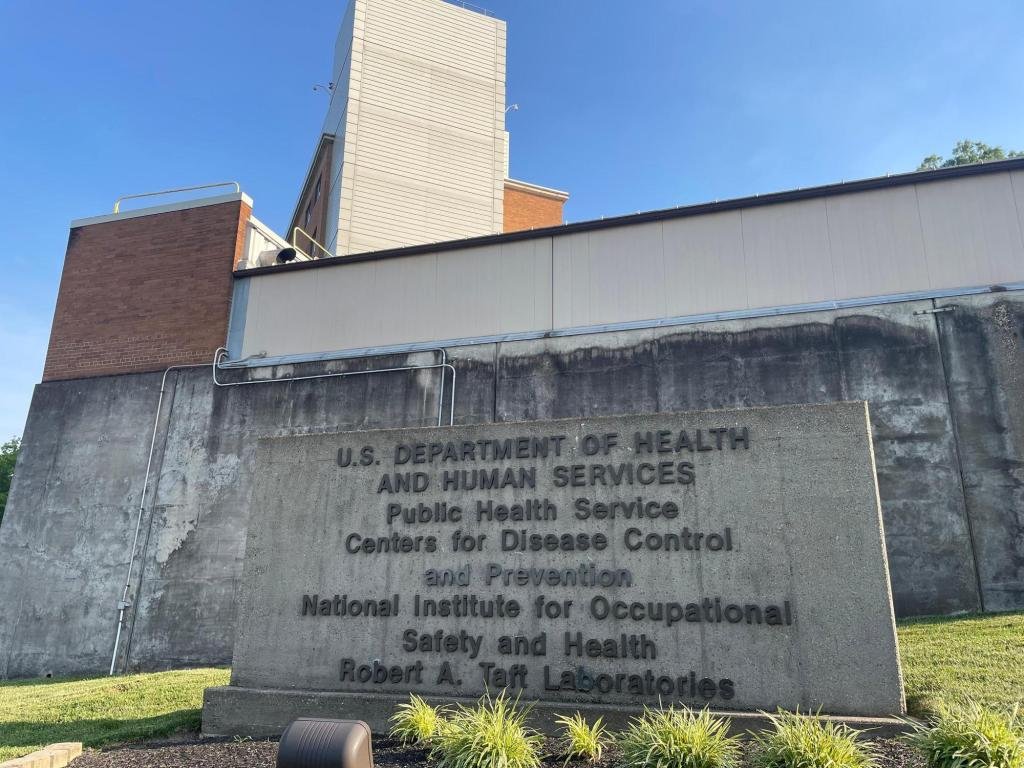
The workplace is the new ground zero for addressing mental health. That means companies — employees and supervisors alike — must confront crises, from addiction to suicide. The two seemingly unrelated advances in Connecticut and Pennsylvania have one common factor: They grew out of the work of a little known federal agency called the National Institute for Occupational Safety and Health.
It’s one of the key federal agencies leading workplace mental health efforts, from decreasing alarmingly high rates of suicide among construction workers to addressing burnout and depression among health care workers.
But after gaining considerable traction during the COVID-19 pandemic, that work is now imperiled. The Trump administration has fired a majority of NIOSH staffers and is proposing severe reductions to its budget.
Private industry and nonprofits may be able to fill some of the gap, but they can’t match the federal government’s resources. And some companies may not prioritize worker well-being above profits.
About 60% of employees worldwide say their job is the chief factor affecting their mental health. Research suggests workplace stress causes about 120,000 deaths and accounts for up to 8% of health costs in the U.S. each year.
“Workplace mental health is one of the most underappreciated yet critical areas we could intervene on,” said Thomas Cunningham, a former senior behavioral scientist at NIOSH who took a buyout this year. “We were just starting to get some strong support from all the players involved,” he said. “This administration has blown that apart.”
NIOSH, established in 1970 by the same law that created the better-known Occupational Safety and Health Administration, is charged with producing research that informs workplace safety regulations. It’s best known for monitoring black lung disease in coal miners and for testing masks, like the N95s used during the pandemic.
As part of the mass firing of federal workers this spring, NIOSH was slated to lose upward of 900 employees. After pushback from legislators — primarily over coal miner and first responder safety — the administration reinstated 328. It’s not clear if any rehired workers focus on mental health initiatives.
At least two lawsuits challenging the firings are winding through the courts. Meanwhile, hundreds of NIOSH employees remain on administrative leave, unable to work.
Emily Hilliard, a press secretary for the Department of Health and Human Services, asserted in a statement that “the nation’s critical public health functions remain intact and effective,” including support for coal miners and firefighters through NIOSH. “Improving the mental health of American workers remains a key priority for HHS, and that work is ongoing,” she wrote.
She did not answer specific questions from KFF Health News about whether any reinstated NIOSH employees lead mental health efforts or who is continuing such work.
-
Kyle Zimmer spent 25 years with the International Union of Operating Engineers Local 478 in Connecticut, for which he started a members’ assistance program, which he says helps workers with “the big three”— mental health, addiction, and suicide prevention. (Mike Gates/KFF Health News/TNS)


1 of 4
Kyle Zimmer spent 25 years with the International Union of Operating Engineers Local 478 in Connecticut, for which he started a members’ assistance program, which he says helps workers with “the big three”— mental health, addiction, and suicide prevention. (Mike Gates/KFF Health News/TNS)
Reducing Suicides and Addiction in Construction and Mining
Over 5,000 construction workers die by suicide annually — five times the number who die from work-related injuries. Miners suffer high rates too. And nearly a fifth of workers in both industries have a substance use disorder, double the rate among all U.S. workers.
Kyle Zimmer recognized these issues as early as 2010. That’s when he started a members’ assistance program for the International Union of Operating Engineers Local 478 in Connecticut. He hired a licensed clinician on retainer and developed partnerships with local treatment facilities.
At first, workers pushed back, said Zimmer, who recently retired after 25 years in the union, many as director of health and safety.
Their perception was, “If I speak up about this issue, I’m going to be blackballed from the industry,” he said.
General contractors and project owners are increasingly incorporating mental health services on-site and as a normal part of their project budgets, says TJ Lyons, a multidecade construction industry safety professional. But slowly, that changed — with NIOSH’s help, Zimmer said.
The agency developed an approach to worker safety called Total Worker Health, which identifies physical and mental health as critical to occupational safety. It also shifts the focus from how individuals can keep themselves safe to how policies and environments can be changed to keep them safe.
Over decades, the concept spread from research journals and universities to industry conferences, unions, and eventually workers, Zimmer said. People began accepting that mental health was an occupational safety issue, he said. That paved the way for NIOSH’s Miner Health Program to develop resources on addiction and for Zimmer to establish the recovery coaching program in Connecticut.
“We have beat that stigma down by a lot,” Zimmer said.
Other countries have made more progress on mental health at work, said Sally Spencer-Thomas, co-chair of the International Association for Suicide Prevention’s workplace special interest group. But with the growth of the Total Worker Health approach, a 2022 surgeon general report on the topic, and increasing research, the U.S. appeared to finally be catching up. The recent cuts to NIOSH suggest “we’re kind of losing our footing,” she said.
Last year, Natalie Schwatka, an assistant professor at the Colorado School of Public Health’s Center for Health, Work & Environment, received a five-year NIOSH grant to build a toolkit to help leaders in labor-intensive industries, such as construction and mining, strengthen worker safety and mental health.
While many companies connect people to treatment, few focus on preventing mental illness, Schwatka said. NIOSH funding “allows us to do innovative things that maybe industry wouldn’t necessarily start.”
Her team planned to test the toolkit with eight construction companies in the coming years. But with few NIOSH employees left to process annual renewals, the funds could stop flowing anytime.
The consequence of losing such research is not confined to academia, Zimmer said. “Workers’ health and safety is very much in jeopardy.”
Health Care Sector Braces for Fallout From NIOSH Cuts
For a long time, clinicians have had troubling rates of addiction and suicide risk. Just after the height of the pandemic, a NIOSH survey found nearly half of health workers reported feeling burned out and nearly half intended to look for a new job. The agency declared a mental health crisis in that workforce.
NIOSH received $20 million through the American Rescue Plan Act to create a national campaign to improve the mental health of health workers.
The results included a step-by-step guide for hospital leaders to improve systems to support their employees, as well as tips and suggested language for leaders to discuss well-being and for workers to advocate for better policies.
Cunningham, the behavioral scientist who left NIOSH this year, helped lead the effort. He said the goal was to move beyond asking health workers to be resilient or develop meditation skills.
“We’re not saying resilience is bad, but we’re trying to emphasize that’s not the first thing we need to focus on,” he said.
Instead, NIOSH suggested eliminating intrusive questions about mental health that weren’t relevant to keeping patients safe from hospital credentialing forms and offering workers more input on how their schedules are made.

The agency partnered on this work with the Dr. Lorna Breen Heroes’ Foundation, named after an emergency medicine doctor who died by suicide during the pandemic. The foundation extended the campaign by helping health systems in four states implement pieces of the guide and learn from one another.
Foundation leaders recently appeared on Capitol Hill with Noah Wyle, who plays an emergency physician on the TV series “The Pitt,” to advocate for renewed federal funding for this work.
Corey Feist, foundation CEO and co-founder, said renewing that funding to NIOSH is crucial to get this guide out to all hospitals.
Without those resources, “it’s just going to really delay this transformation of health care that needs to happen,” he said.
Who Can Fill the Gap?
TJ Lyons, a multidecade construction industry safety professional who has worked at big-name companies such as Gilbane, Turner, and DPR Construction, is confident that workplace mental health will remain a priority despite the NIOSH cuts.
General contractors and project owners have been incorporating budget lines for mental health support for years, he said, sharing an example of a $1 billion project that included a mental health clinician on call for four hours several days a week. Workers would make appointments to sit in their pickup trucks during lunch breaks and talk to her, he said.
Now when these big companies subcontract with smaller firms, they often ask if the subcontractors provide mental health support for workers, Lyons said.
But others are skeptical that industry can replace NIOSH efforts.
Several workplace safety experts said smaller companies lack the means to commission research studies and larger companies may not share the results publicly, as a federal agency would. Nor would they have the same credibility.
“Private industry is going to provide what the people paying them want to provide,” said a NIOSH employee and member of the American Federation of Government Employees union, currently on administrative leave, who was granted anonymity for fear of professional retaliation.
Without federal attention on workplace mental health, “people may leave the workforce,” she said. “Workers may die.”
©2025 KFF Health News. Distributed by Tribune Content Agency, LLC.