


Editor’s Note: This article was written for Mosaic, an independent journalism training program for high school students who report and photograph stories under the guidance of professional journalists.
With the popularity and growth of digital and cashless payment methods, stores are increasingly turning to cashless business models.
Redwood City teenager Isabella Terranova, 18, has noticed more businesses that don’t take cash. She said the first time she noticed, she was trying to pay with cash at a gas station.
“I walked into the store with my 40 bucks in hand, and the guy was like, ‘We don’t take cash.’ And I was actually in a big pickle because I didn’t have a card at the time,” Terranova said. “I kind of tried to challenge it. But what can you do? You can’t force them to take your money. I know that cash is becoming less and less accepted.”
Betty Duong, Santa Clara County District 2 supervisor representing San Jose, has also noticed a trend of more cashless operations. She said a lot of restaurants went cashless during the pandemic for health safety and stayed that way for security reasons.
“A lot of my downtown and East Side businesses converted only to cashless transactions and currencies because they were getting burglarized,” Duong said.
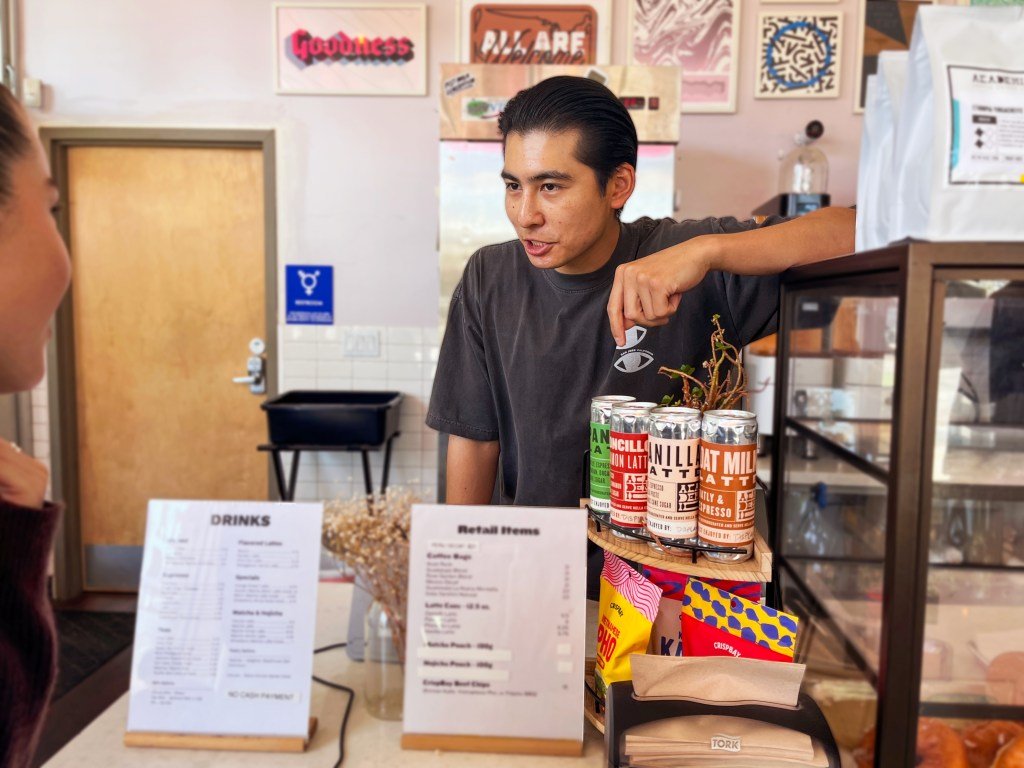
Her sister’s family owns Academic Coffee, a cafe in downtown San Jose that was burglarized eight times in the past few years before switching to a cashless model, Cafe Manager Shaun Kim said.
“It costs more money to fix everything because of the break-ins than to really deal with handling cash,” Kim said.
San Jose resident Emil Marquez, a patron of Academic Coffee since it opened in 2017, said he always paid with cash before the transition.
“I understood why they were doing it, so it wasn’t such a big burden,” he said, adding that paying with cash was more of a habit. “It’s especially so with older generations, they always had cash, and then everybody’s using their phone now. I’m still trying to adapt.”
Marquez said it took around two months for him to fully adapt to the cashless change. He noticed that other customers also had an adjustment period.
Kim said he doesn’t think sales really suffered because of going cashless, but “it effectively stopped us from getting broken into.”
He also added that going cashless improved efficiency, because cashiers didn’t have to deal with physical bills.
Tina Nguyen, store manager for bakery Uncle Tetsu at the Westfield Valley Fair Mall in San Jose, agreed, adding that going cashless saved her employees time because they don’t have to count money every night.
Counting cash is “not really convenient for us,” Nguyen said.
Kim said Academic Coffee occasionally does have to turn someone away because they don’t have a card. “Which sucks, because obviously we want to serve as many people as we can,” he said.
Cashless operations do leave out those who don’t have cards.
A 2022 national survey from Junior Achievement USA found that 38% of teens preferred to pay cash. The Federal Deposit Insurance Corp., an agency that insures bank deposits, reported in 2023 that 4.2% of U.S. households, or about 5.6 million households, do not have bank accounts.
Ruth Susswein, director of Consumer Protection for Consumer Action, a nonprofit advocacy group, said lower income or marginalized consumers can be excluded from the marketplace if they are required to pay with credit or debit only.
“We encourage people who prefer to pay with cash to make their position known to the owner or manager of the restaurant,” Susswein wrote, “and to let them know they are losing business by excluding an entire portion of the buying public.”
She and other consumer advocates believe that cash is the most universal and equitable way to maintain businesses.
Some counties have banned cashless restaurants. In 2019, the San Francisco Board of Supervisors stipulated that brick-and-mortar stores must accept cash as payment.
However, Duong said she would not consider such a ban in Santa Clara County. Instead, she advocates for more ways to support businesses, but she also has empathy for customers who are adapting to a cashless business.
“I feel like we’re at a bit of a crossroads in making sure that this is inclusive of all members of society,” Duong said.
Isabelle Ling is a member of the class of 2026 at Carlmont High School in Belmont.